
The travel industry is evolving faster than ever, and technology continues to shape how people plan, book, and experience their journeys. Among the biggest innovations driving this change is AI in travel, which is helping businesses deliver personalized experiences while making travel planning more convenient for customers.
From intelligent recommendations and virtual assistants to automated booking systems, AI in travel is redefining the way travel agents and travelers interact with services across the globe. Whether you’re a travel professional looking to stay ahead of industry trends or a traveler seeking seamless experiences, understanding how artificial intelligence is transforming tourism has become of the utmost importance.
In this blog, we’ll explore how AI in travel is changing the industry, its benefits, and the tools travel professionals should know in 2026.
Understanding AI in Travel
AI in travel refers to the use of intelligent travel technologies that can analyze data, automate processes, predict customer preferences, and improve travel experiences. Today’s travel ecosystem leverages machine learning, natural language processing, predictive analytics, and automation to deliver faster and smarter solutions.
The rise of artificial intelligence in travel industry applications has transformed everything from flight searches and hotel recommendations to customer service and dynamic pricing. Businesses are increasingly adopting intelligent systems to provide personalized offerings while reducing operational challenges.
Some of the most common applications include:
- Personalized travel recommendations
- Automated customer support through chatbots
- Dynamic pricing and demand forecasting
- Smart itinerary planning
- Fraud detection and payment security
- Real-time travel updates and disruption management
- Voice-enabled travel searches and bookings
With continuous advancements, AI in travel is no longer a futuristic concept—it is becoming a necessity for businesses that wish to remain competitive.

How AI is Transforming the Travel Industry
One of the biggest conversations today is how AI is transforming the travel industry. Technology is reshaping every stage of the customer journey, creating opportunities for both businesses and travelers.
Personalized Travel Experiences – Modern travelers expect recommendations tailored to their preferences. AI-powered systems can analyze browsing behavior, previous bookings, budgets, and travel interests to suggest relevant destinations, accommodations, and activities. Instead of spending hours comparing options, travelers can receive customized suggestions that align with their needs and preferences.
Smarter Travel Planning – Today’s AI Travel Technology enables intelligent itinerary planning based on factors such as:
- Travel duration
- Weather forecasts
- Budget preferences
- Local experiences
- Transportation options
- Seasonal demand
This allows travelers to make informed decisions while simplifying the planning process.
Faster Customer Support – AI-driven virtual assistants can provide instant responses to common travel-related questions. From flight status updates to visa requirements and cancellation policies, travelers can receive timely assistance at any hour of the day. Travel businesses also benefit by reducing response times and improving customer satisfaction.
Enhanced Operational Efficiency – Travel companies are increasingly using predictive analytics to anticipate customer demand and optimize inventory management. Hotels, airlines, and tour operators can adjust pricing strategies while improving service delivery.
These developments highlight why AI in travel continues to gain momentum across global markets.
AI for Travel Agents: Why It Matters
The growing adoption of AI for Travel Agents is helping professionals become more efficient while delivering better customer experiences. Rather than replacing travel experts, AI serves as a valuable assistant that handles repetitive tasks and provides actionable insights.
Travel agents can now:
- Automate quotation and itinerary generation
- Offer personalized destination recommendations
- Respond faster to customer inquiries
- Monitor pricing changes in real time
- Improve customer relationship management
- Streamline booking processes
By reducing manual workloads, travel professionals can focus more on building meaningful client relationships and offering expert travel advice.
Benefits of AI for Travel Agents and Travelers
There are numerous Benefits of AI for travel agents and travellers, including:
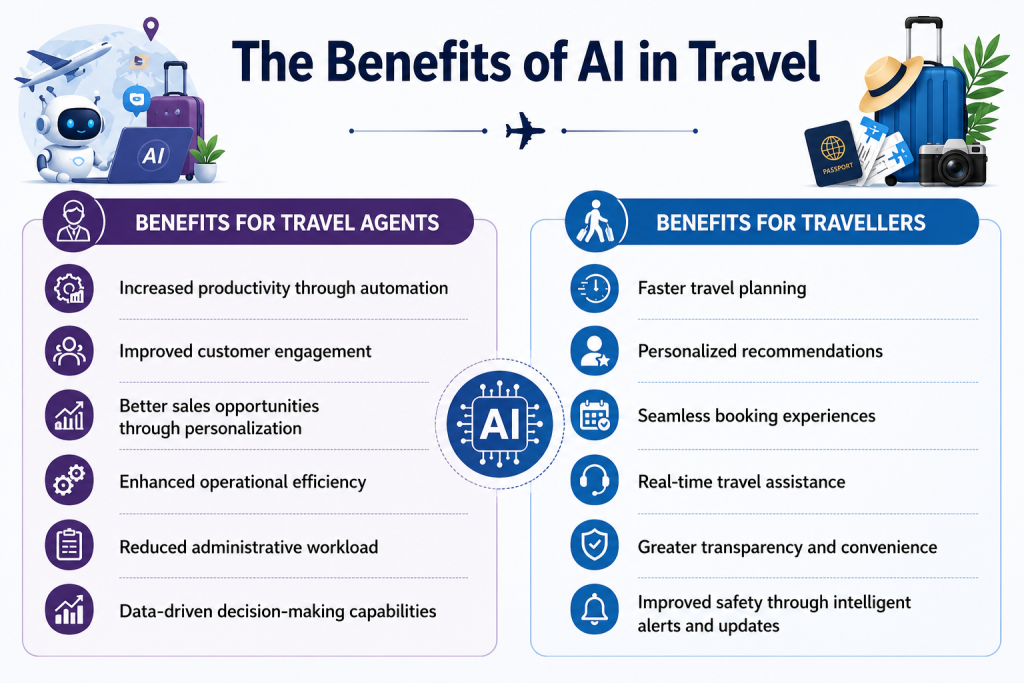
These advantages demonstrate why AI in travel is becoming an essential part of modern tourism services.
AI Powered Travel Booking: The New Standard
The emergence of AI Powered Travel Booking is changing how travellers search and reserve travel services.
AI-powered booking systems can analyze thousands of options within seconds to recommend flights, hotels, transfers, and activities based on individual preferences. These intelligent platforms can also predict pricing trends and suggest the best times to book.
Key features include:
- Personalized booking recommendations
- Automated itinerary generation
- Intelligent upselling opportunities
- Multi-destination trip planning
- Real-time pricing analysis
- Instant booking confirmations
As travellers increasingly seek convenience and flexibility, AI Powered Travel Booking solutions are expected to become even more sophisticated in the coming years.
AI Tools Travel Agents Should Know in 2026
Staying informed about emerging technologies is essential for travel professionals. Here are some AI tools travel agents should know in 2026:
AI-Powered Chat Assistants
These tools help manage customer inquiries, provide instant responses, and improve engagement across multiple communication channels. For example, Ask RIYA on RIYA CONNECT empowers travel agents with quick access to relevant information and real-time assistance, helping them streamline interactions and deliver faster, more efficient customer support.
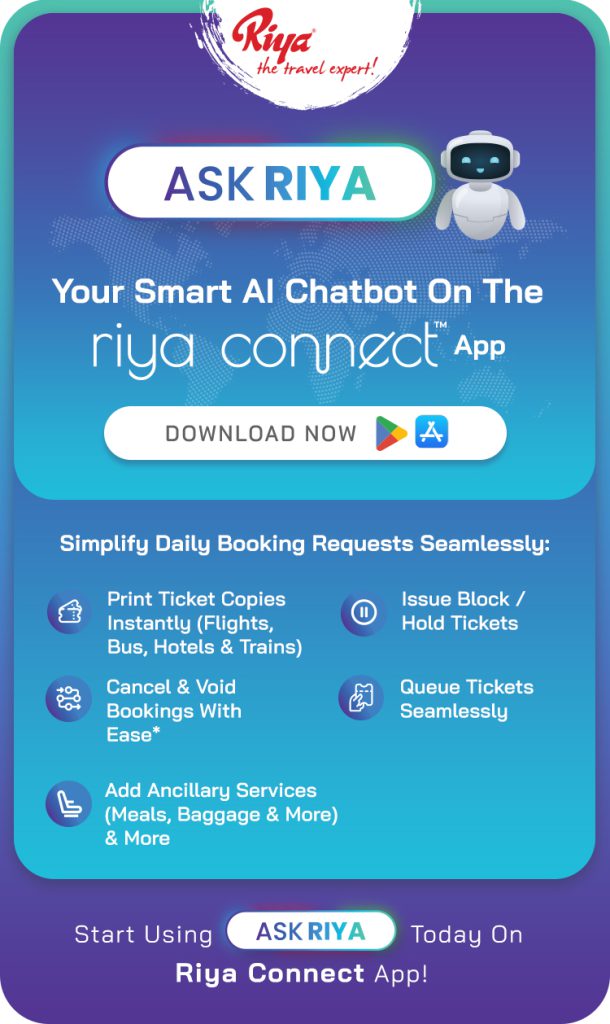
Simplify Your Tasks Using ASK RIYA Chatbot
Smart CRM Platforms
AI-enabled customer relationship management systems can analyze customer preferences and recommend personalized travel packages.
Dynamic Pricing Solutions
Intelligent pricing tools monitor market demand and competitor trends to optimize pricing strategies for travel businesses.
Automated Itinerary Builders
Travel agents can significantly reduce planning time by using AI-powered itinerary generators that customize experiences based on client preferences.
Predictive Analytics Platforms
These solutions help businesses forecast booking trends, identify customer behavior patterns, and make informed operational decisions. As travel technology continues to evolve, investing in the right tools can provide a competitive advantage in an increasingly digital marketplace.
The Future of AI in Tourism
The Future of AI in Tourism promises exciting possibilities for both businesses and travellers.
Emerging innovations are expected to include:
- Hyper-personalized travel recommendations
- Intelligent virtual travel assistants
- Enhanced language translation capabilities
- Smart airport experiences
- Advanced predictive travel planning
- Improved sustainability initiatives through data analytics
- More immersive travel experiences powered by intelligent technologies
The continued development of AI in travel will likely create more connected, seamless, and efficient experiences across the tourism ecosystem.
Travel professionals who embrace these innovations will be better positioned to meet changing consumer expectations and deliver exceptional services.
Challenges and Considerations
While the benefits are significant, businesses must also address challenges associated with implementing AI technologies.
Some important considerations include:
- Data privacy and security
- Ethical use of customer information
- Maintaining human interactions where necessary
- Continuous technology upgrades
- Employee training and adaptation
The most successful organizations will combine intelligent automation with human expertise to create meaningful customer experiences.
The rapid growth of AI in travel is transforming how people plan, book, and experience their journeys. From personalized recommendations and intelligent booking platforms to enhanced customer support, AI is creating valuable opportunities for both travel businesses and consumers.
As AI in travel continues to evolve, travel agents can leverage innovative technologies to improve efficiency, while travellers benefit from greater convenience and personalization. Understanding the applications of artificial intelligence today will help businesses remain competitive and prepare for the exciting developments shaping the future of tourism.
The future of travel is intelligent, connected, and increasingly powered by AI—and those who adapt early will be best positioned to thrive.