In the travel industry, the terms tour operator and travel agent are often used interchangeably. For someone new to the industry, or even for a regular traveller, this can be confusing. Many people do not really know the difference between tour operator and travel agent, yet this difference plays a big role in how trips are planned, priced, and delivered.
Whether you are a new travel professional, an aspiring agent, or a customer trying to understand who you are booking your trip with, knowing the difference between tour operator and travel agent helps you make better decisions and set the right expectations.

Understanding the Confusion Between Tour Operators and Travel Agents
The confusion around the difference between tour operator and travel agent exists because both operate in the same ecosystem and both deal with customers. In many markets, especially in India, a single company may perform both roles, which makes the distinction even less clear. However, at their core, these two roles are very different in terms of responsibility, risk, and how travel products are created and sold.
To understand this clearly, we must start with the basics.
What is a Travel Agent?
A travel agent is primarily a seller and advisor. They act as an intermediary between the customer and various travel service providers such as airlines, hotels, tour operators, cruise lines, and insurance companies.
A travel agent typically:
- Advises customers on destinations and travel options
- Books flights, hotels, transfers, visas, and packages
- Sells products created by tour operators or other suppliers
- Helps with changes, cancellations, and customer support
In simple terms, a travel agent does not usually create the travel product. They sell and manage it on behalf of others.
Also Read: 8 Common Mistakes B2B Travel Agents Should Avoid
What is a Tour Operator?
A tour operator is the creator of the travel product. They design, build, and package complete travel experiences by combining hotels, transport, sightseeing, guides, and activities.
A tour operator typically:
- Contracts hotels, transport companies, and local suppliers
- Designs itineraries and fixed or customised packages
- Sets pricing and inclusions
- Takes responsibility for the end-to-end delivery of the trip
So, while a travel agent sells travel, a tour operator manufactures travel. This fundamental distinction is at the heart of the difference between tour operator and travel agent.
The Real Difference Between Tour Operator and Travel Agent
The difference between tour operator and travel agent becomes very clear when you look at how each operates.
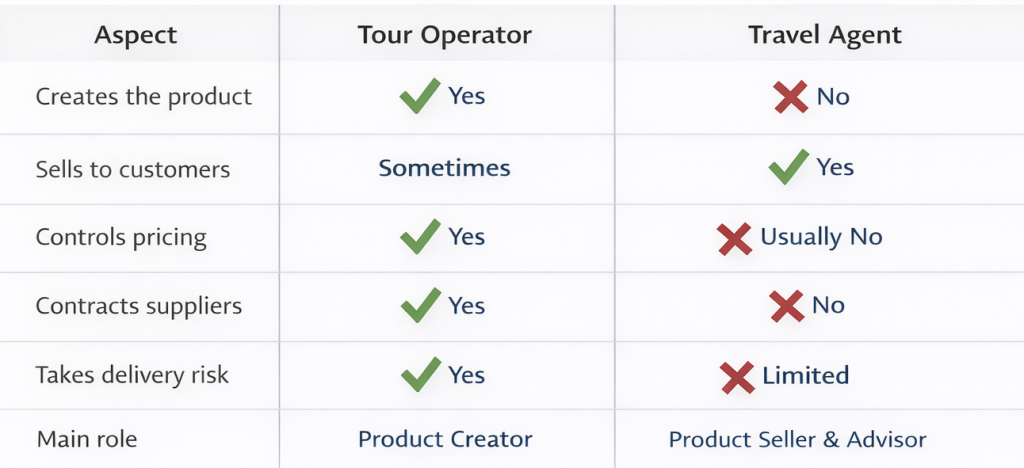
This comparison shows why the difference between tour operator and travel agent is not just about titles. It affects pricing, responsibility, flexibility, and accountability.
Tour Operator vs Travel Agent: A Real-World Example
Consider a six-day Switzerland package. The tour operator designs the itinerary, contracts hotels, arranges transport and sightseeing, and prices the package. The travel agent then sells this package to the customer, advises on dates and visas, and handles the booking, payment, and service support. This example clearly shows the difference between tour operator and travel agent in real-life operations.
Tour Operator vs Travel Agent for Trip Planning: Who Should You Choose?
When it comes to Tour operator vs travel agent for trip planning, most travellers actually benefit from both. The tour operator ensures that the trip is well designed, cost-efficient, and operationally sound. The travel agent ensures that the customer gets the right advice, comparisons, customisation, and support before and after the booking. Together, they form a complete and reliable travel delivery system.
Also Read: India Launches New E-B-4 Visa for Chinese Nationals
Travel Agent and Tour Operator Roles and Responsibilities
Understanding Travel agent and tour operator roles and responsibilities is especially important for new agents entering the industry, for B2B partners, and even for customers who want clarity on accountability.
In practical terms, the tour operator is responsible for what is delivered on the ground, while the travel agent is responsible for how the product is sold, explained, and supported. This operational distinction is another important aspect of the difference between tour operator and travel agent.

Role of Tour Operators and Travel Agents in Today’s Travel Industry
The role of tour operators and travel agents has evolved significantly over the years. Tour operators today focus more on dynamic packaging, better contracting, and technology-driven inventory and pricing. Travel agents, on the other hand, focus more on consultation, expertise, customisation, and relationship management.
Despite the rise of direct online bookings, both roles remain highly relevant. They have simply become more specialised and more professional.
Benefits of Booking with a Tour Operator (Even If You Use an Agent)
There are several clear benefits of booking with a tour operator, even when the booking is done through a travel agent. Since tour operators work on bulk contracts and structured planning, they are usually able to offer better pricing stability and more reliable itineraries. Their packages are typically tested, refined, and operationally secure, which reduces the risk of on-ground issues. Another important advantage is that the tour operator takes overall responsibility for the trip, which means there is a single point of accountability for the complete experience. When a good travel agent sells a strong tour operator product, the customer benefits from both professional planning and personal service.
To put it simply, the difference between tour operator and travel agent lies in what they do at the core. A tour operator creates and operates travel experiences, while a travel agent sells, advises, and manages those experiences for the customer. They are not competitors but partners in the same ecosystem.
For new travel professionals, understanding this distinction helps in positioning a business correctly, choosing the right partners, and building a more scalable operation. For customers, it helps in knowing who is responsible for what, where the money is going, and what to expect from each party involved in their journey.